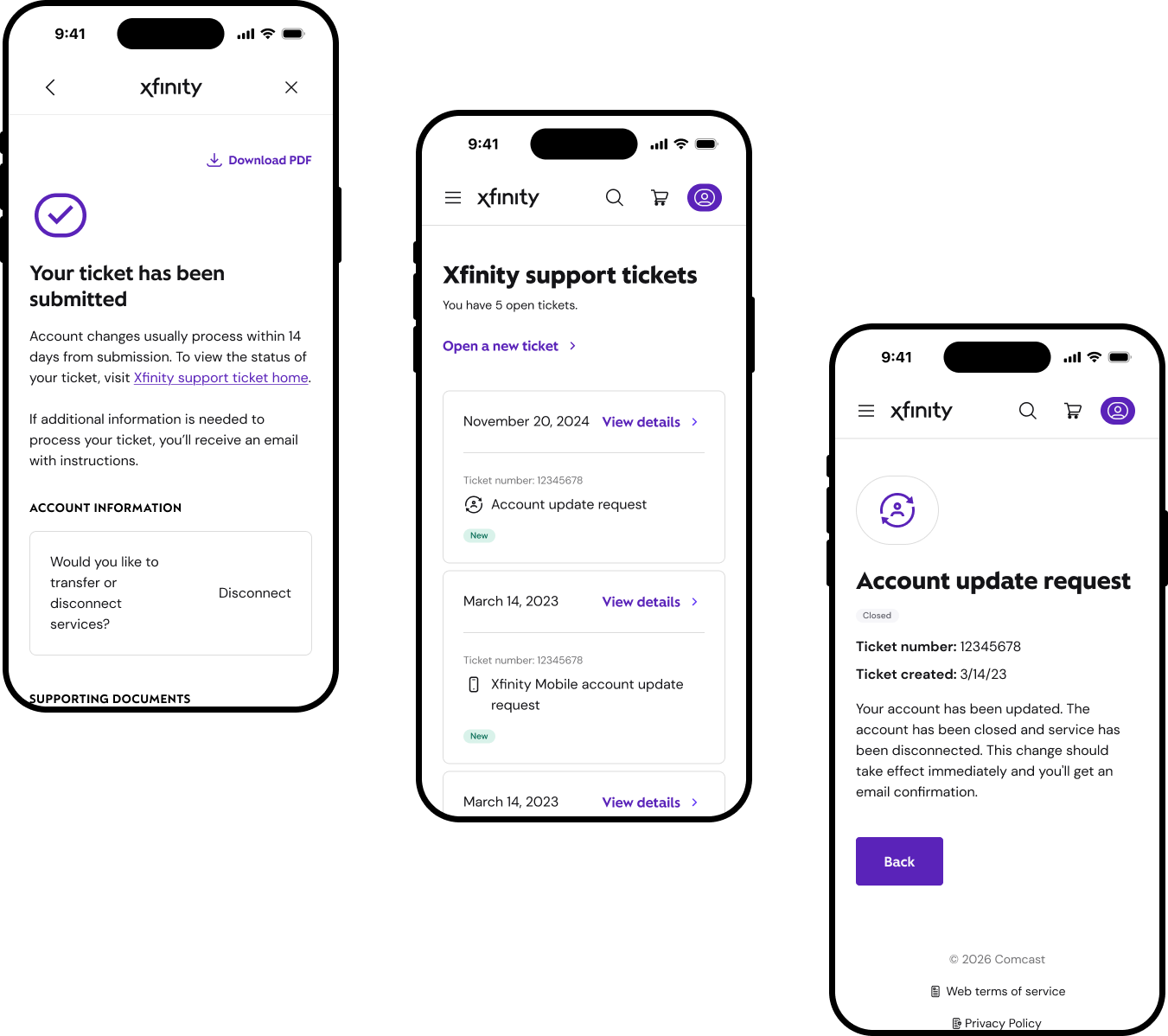
Managing Account Changes During Major Life Events
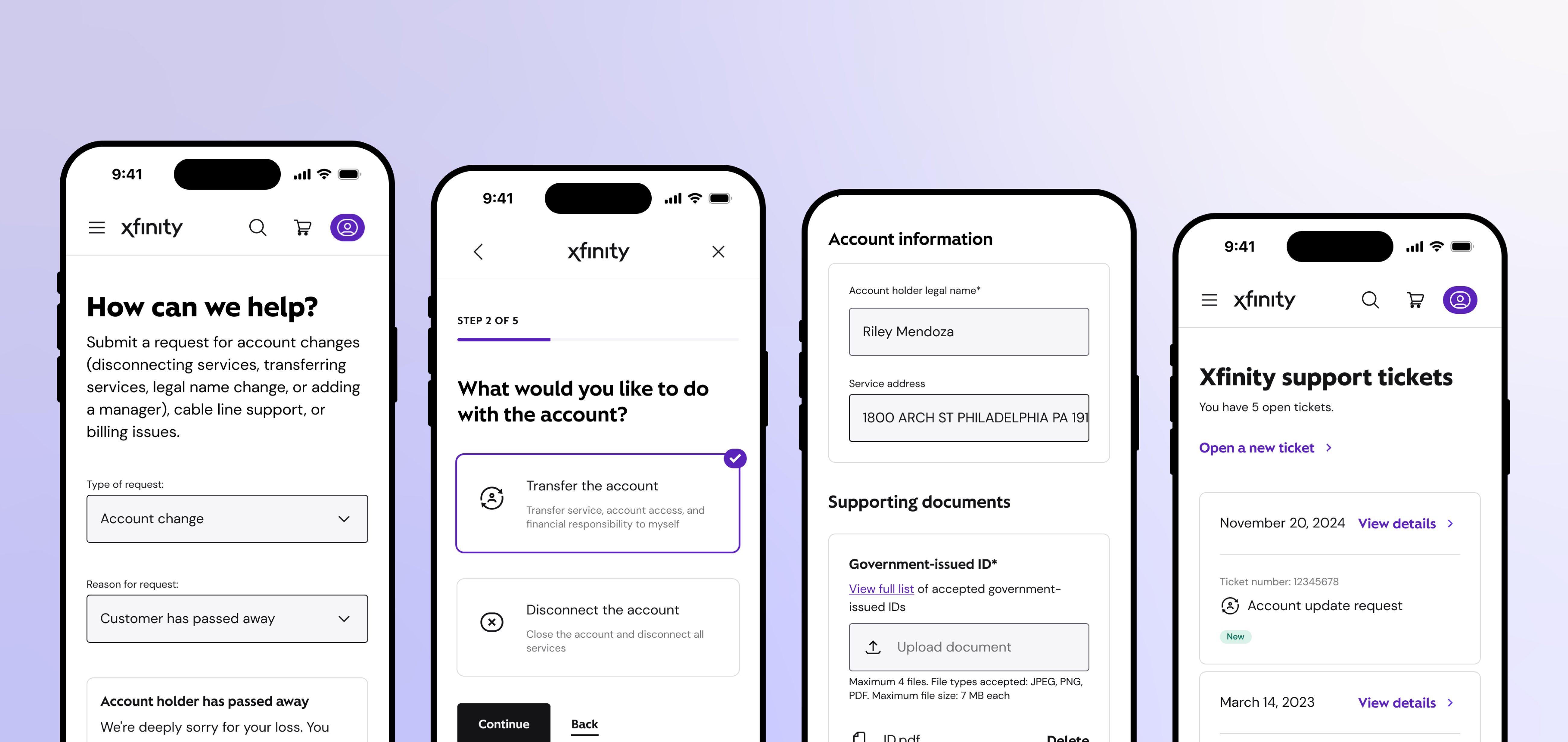
Opportunity
Customers navigating major life events often needed to make sensitive changes to their account, including:
🏠 Transferring or closing an account after a death
💍 Updating a legal name after marriage or divorce
👤 Adding an account manager due to incapacitation or incarceration
🪖 Suspending or disconnecting service during military deployment
Despite the emotional weight and complexity of these situations, the process remained largely manual and disconnected from the digital experience.
To Complete an Account Change, Customers Typically Had To
📞 Call customer support or visit a retail location
🗣️ Explain a sensitive personal situation to an agent
📄 Submit legal or supporting documentation manually
⏳ Wait for a back-office team to review and process the request
These requests were often time-sensitive and emotionally difficult, yet customers had limited visibility into what information was required or what would happen next. The process represented a Top 25 customer pain point, generating approximately 1,800 escalations annually and highlighting a significant opportunity to reduce customer effort through digital self-service.
As part of a broader self-service initiative, we introduced a guided workflow that allowed customers to independently submit account change requests online.
The goal was to create a scalable intake experience that simplified complex scenarios while reducing reliance on support agents and in-store visits.
The Problem
Account changes are rarely simple.
Many requests involve legal documentation, sensitive circumstances, and varying business rules depending on the use case.
Previously, customers could not begin this process independently online.
Pain points included:
- Customers were required to contact support or visit a store.
- Sensitive situations often required repeating personal context to multiple agents.
- Different account changes followed inconsistent support pathways.
- Users had little visibility into what information or documentation was needed.
- The process felt unclear, manual, and emotionally taxing.
These account updates represented high-friction moments where clarity and empathy were critical.
Goals
We aimed to create a unified account change workflow that allowed customers to:
- Initiate account changes independently online.
- Select the type of account change they needed.
- Complete a dynamic, guided flow tailored to their situation.
- Upload required documentation.
- Review and confirm details before submission.
- Submit a ticket for back-office review.
- Track request progress digitally.
The experience also needed to support future expansion into additional ticketing and service workflows.
My Role
As UX Lead, I owned the end-to-end design strategy and experience architecture for the account change workflow.
My responsibilities included:
- Defining the overall ticket intake framework.
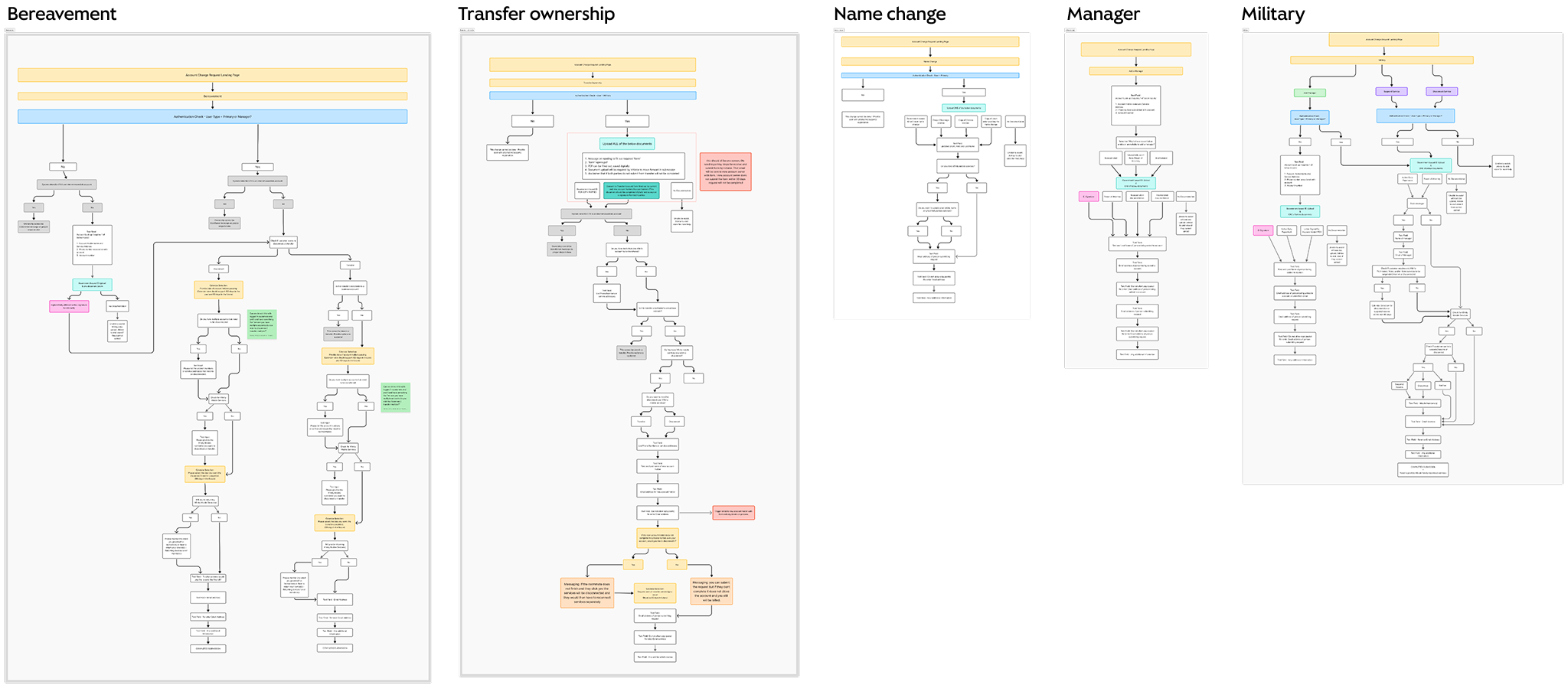
- Mapping branching logic across multiple account-change scenarios.
- Designing dynamic forms tailored to user responses.
- Collaborating with legal, support, product, and engineering stakeholders.
- Creating reusable flow patterns for future ticketing use cases.
- Designing mobile-responsive experiences and interaction patterns.
Use Cases Supported
The experience supported several high-sensitivity account changes, including:
- Closing or transferring an account after the death of an account holder.
- Transferring account ownership to another person, often a roommate.
- Updating a legal name after marriage or divorce.
- Adding an account manager when the account holder was incapacitated or incarcerated.
- Suspending or disconnecting an account due to military deployment.
Each use case required unique inputs, eligibility rules, documentation, and messaging.
The Challenge
Although the experience appeared as a single intake flow, it needed to support multiple pathways beneath the surface.
Each account change introduced different requirements:
- Different documentation types.
- Unique eligibility logic.
- Different customer roles and permissions.
- Varying levels of emotional sensitivity.
- Different downstream ticket handling.
The challenge was creating a unified framework that felt simple to users while supporting complex branching logic behind the scenes.
The experience needed to:
- Reduce cognitive load during emotionally charged situations.
- Avoid overwhelming users with irrelevant questions.
- Guide users through only the steps applicable to their scenario.
- Create confidence before submission.
- Scale to future support use cases.
Approach
Defining a Flexible Ticketing Framework
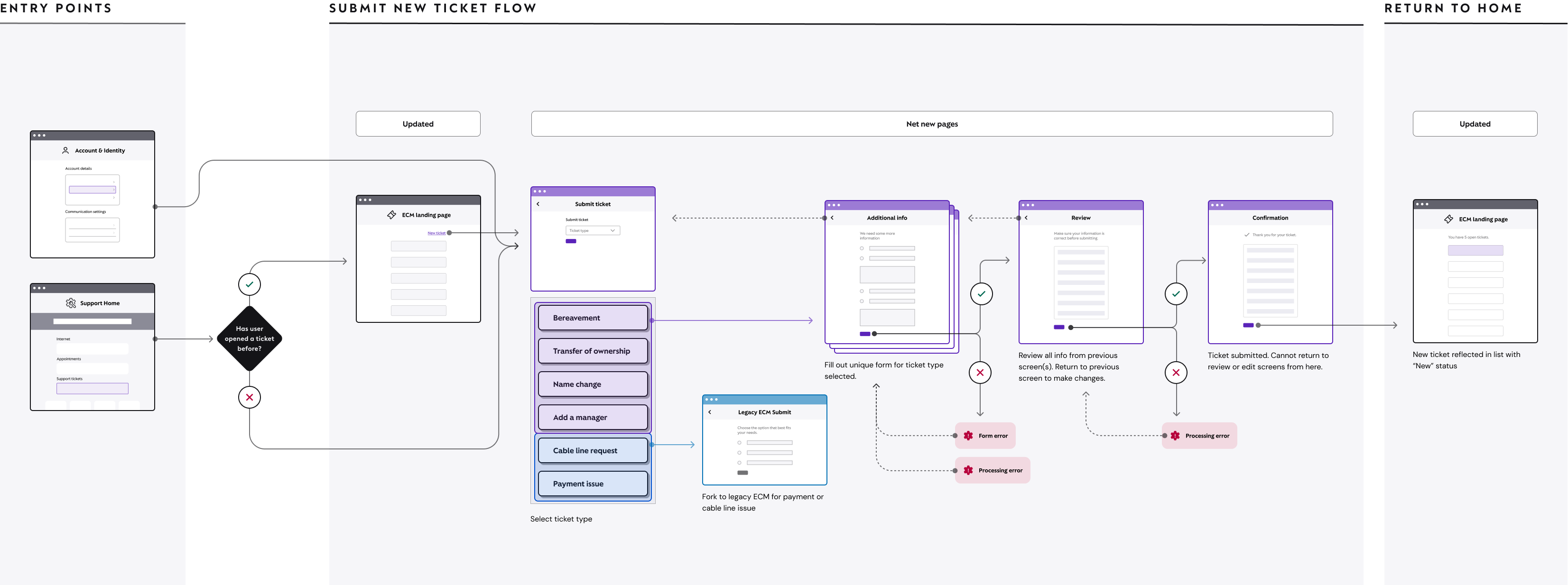
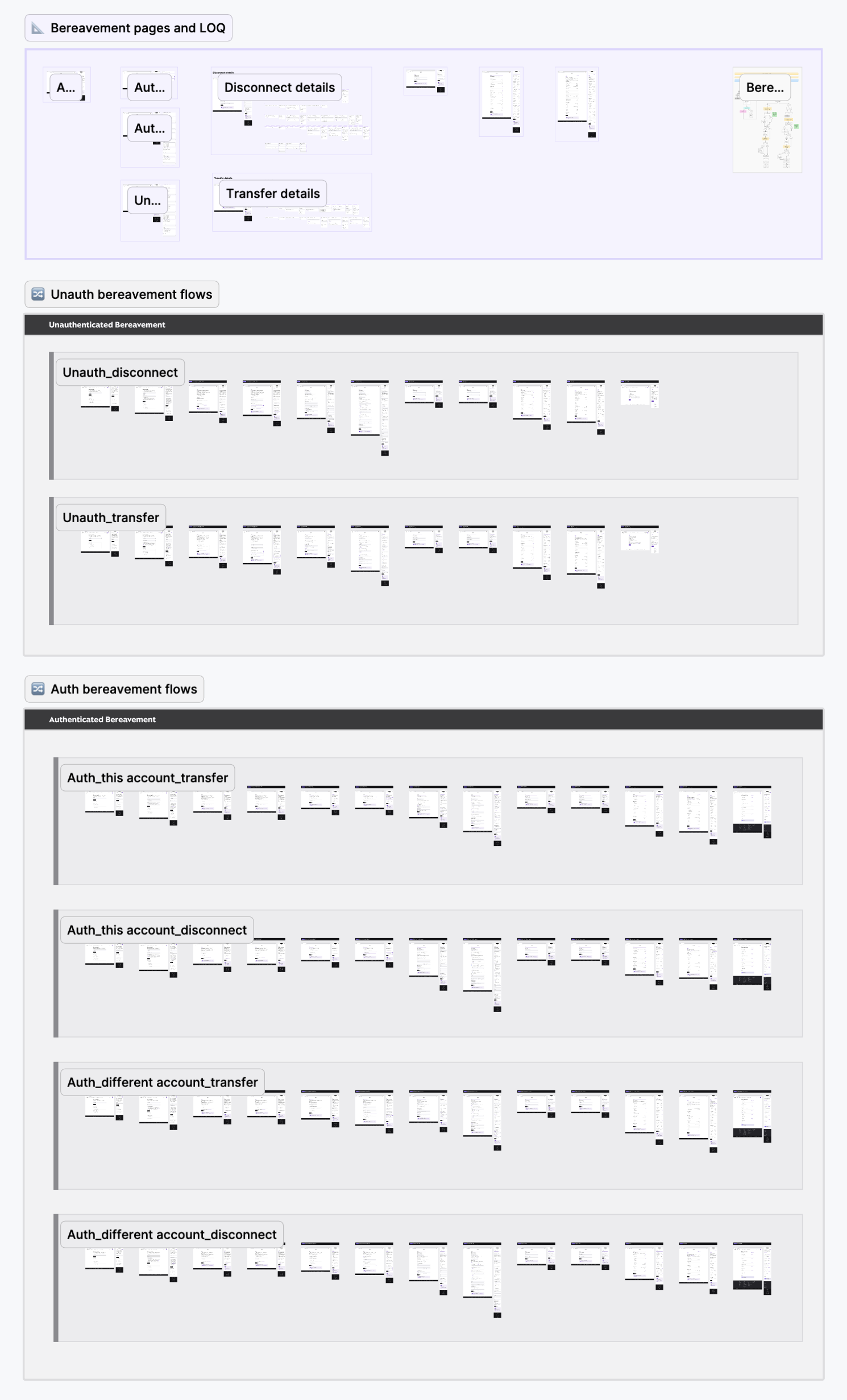
Rather than designing separate experiences for each account change, I helped establish a shared ticketing framework that could accommodate different requirements while maintaining a consistent customer experience.
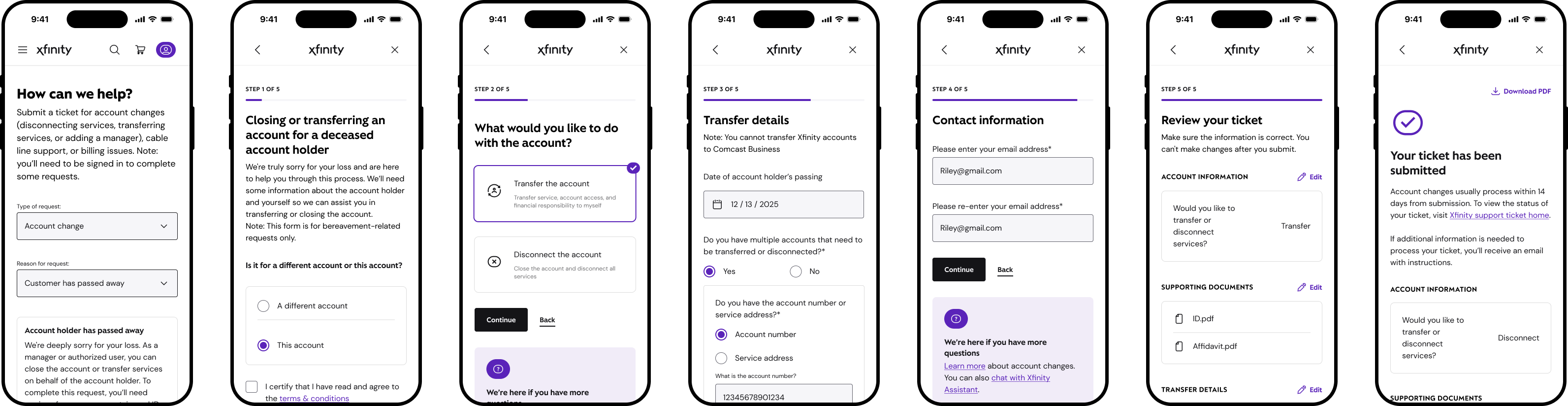
The framework introduced a common entry point, reusable question patterns, conditional routing, document uploads, and standardized review and submission states.
This approach allowed us to balance flexibility with consistency, supporting the initial account-change scenarios while creating a foundation for future self-service workflows.
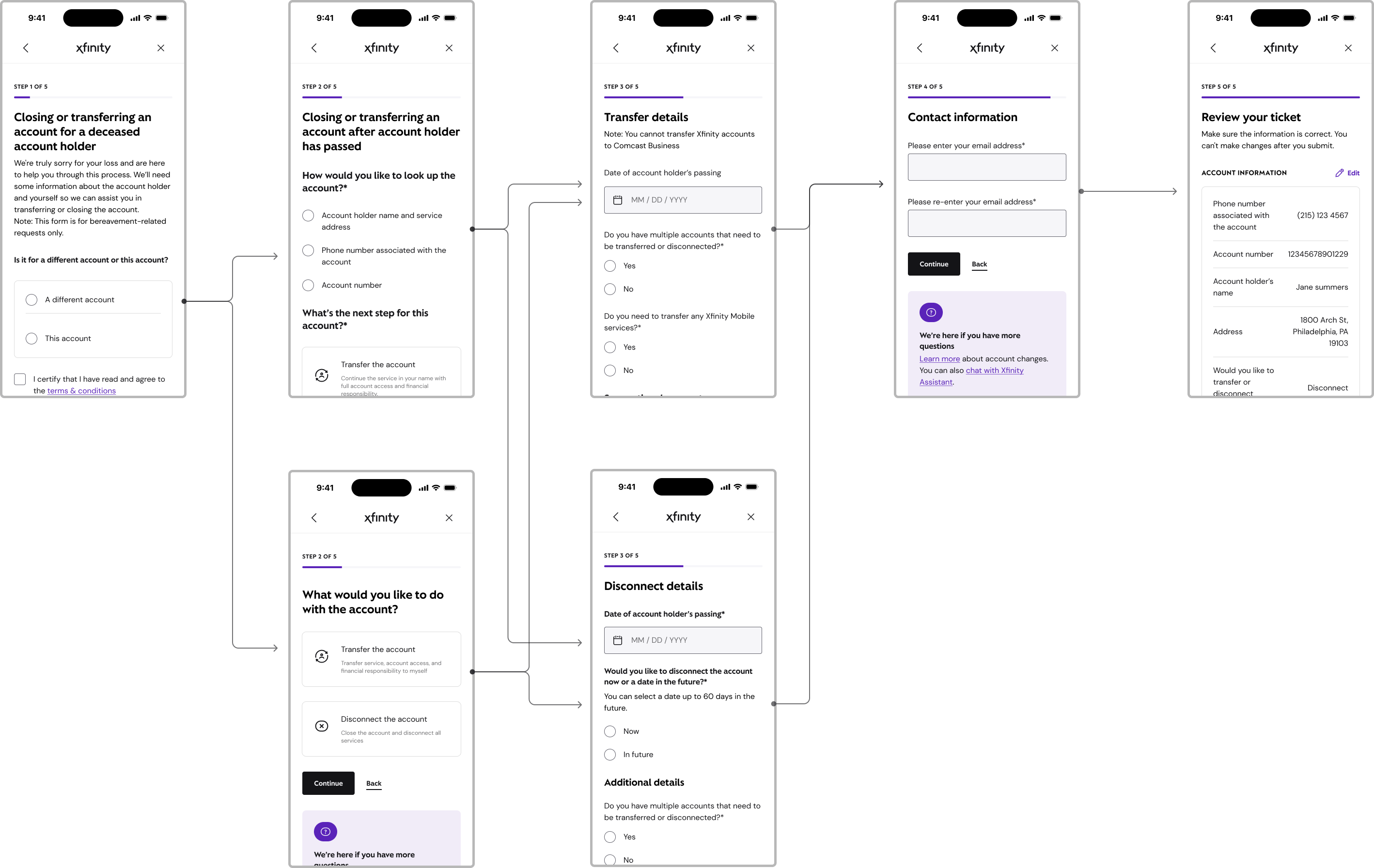
Designing Dynamic Flow Logic
Each account-change scenario introduced unique requirements, from eligibility and documentation to customer roles and permissions.
To manage this complexity, I designed conditional flows that adapted to customers' selections, surfacing only the questions and requirements relevant to their situation.
For example, transferring an account after a death required different documentation, eligibility checks, and messaging than updating a legal name or transferring ownership to a roommate.
This approach replaced the need for lengthy, one-size-fits-all forms with a more focused, guided experience that reduced unnecessary steps and cognitive load.
Breaking Complex Forms Into Manageable Steps
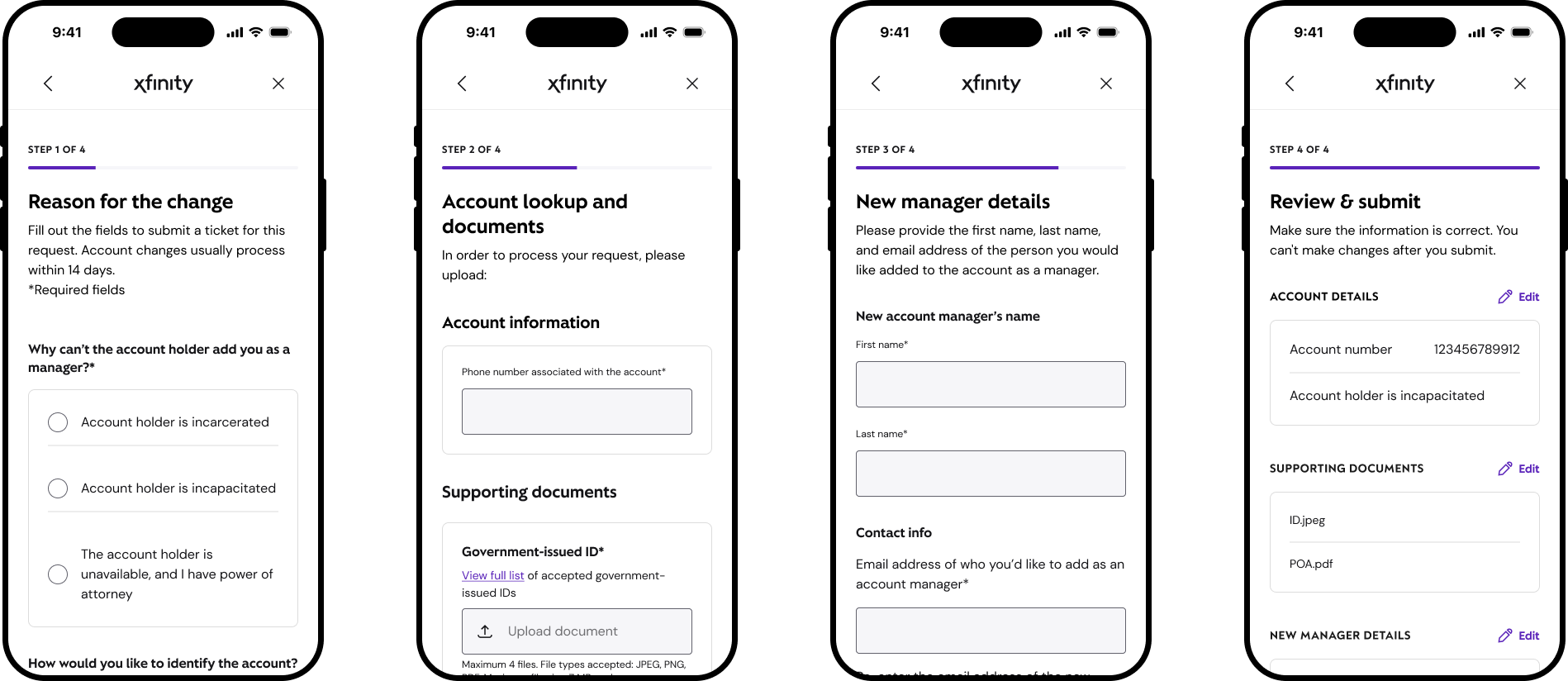
To make complex requests more manageable, I organized each workflow into smaller, clearly defined steps covering account identification, request details, supporting documentation, and review.
This progressive structure helped customers focus on one task at a time, reducing cognitive load while maintaining clarity throughout the process.
Designing for Sensitive Moments
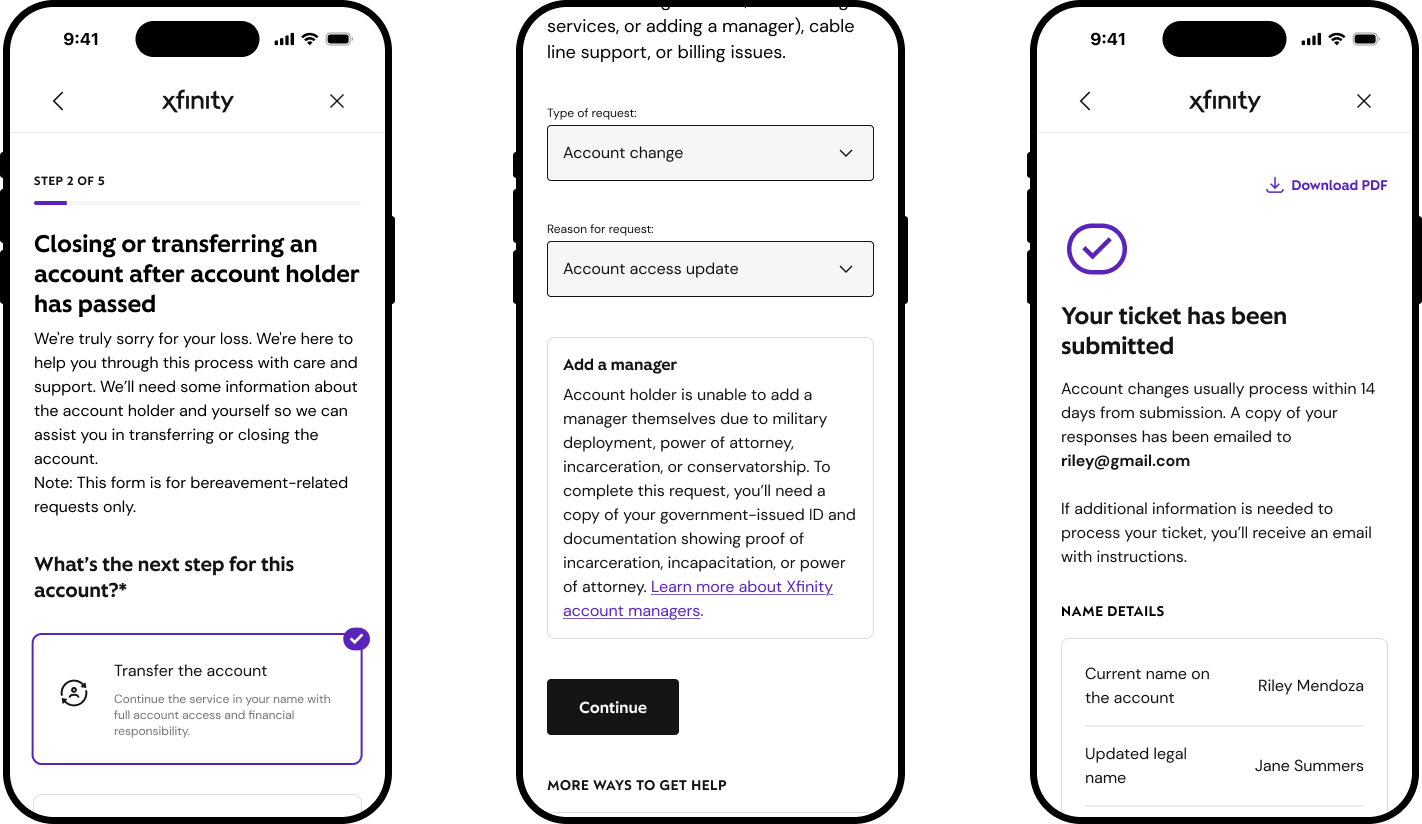
Unlike typical service requests, account changes often occur during emotionally difficult or time-sensitive situations.
I worked closely with content and cross-functional partners to ensure the experience communicated requirements and next steps with clarity, empathy, and transparency.
This meant prioritizing straightforward language, explaining why sensitive information was required, and setting clear expectations around documentation and request processing.
The goal was to create an experience that felt supportive without introducing unnecessary complexity or emotional friction.
Designing for Scale
Review & Confirmation
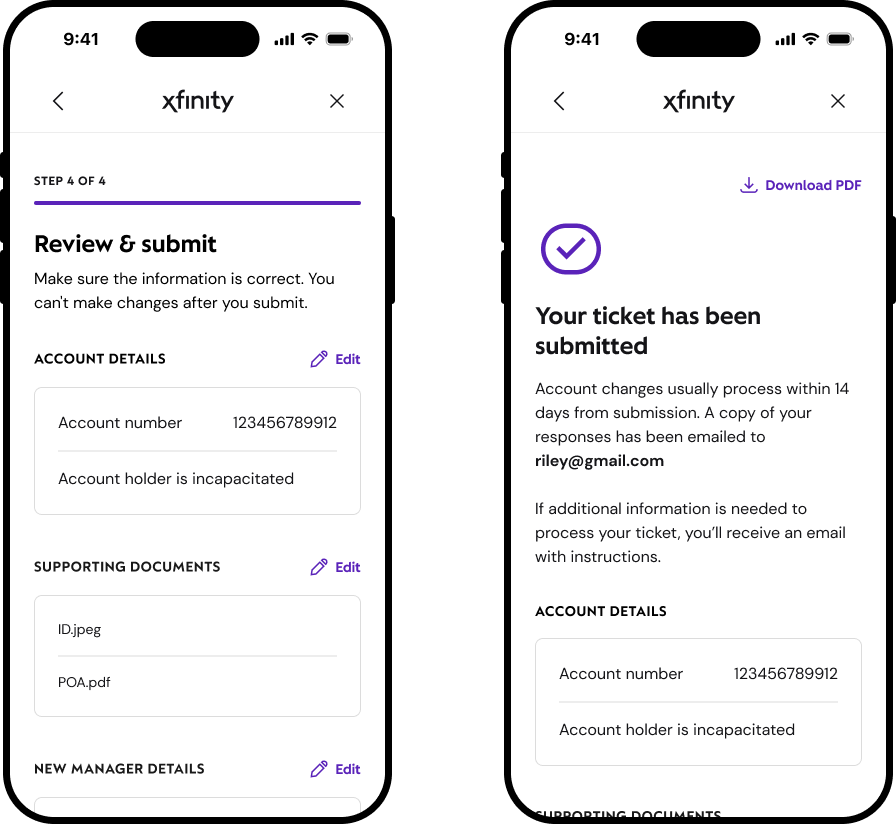
Because account changes involved sensitive information and potentially consequential requests, customers needed an opportunity to verify their details before submission.
I designed a structured review screen with independently editable sections, allowing customers to correct information without restarting the workflow.
This created a final checkpoint for accuracy and confidence before requests entered the back-office review process.
Solution
The final experience introduced an entirely new self-service pathway for sensitive account change requests.
Customers could:
🧭 Initiate account changes online without needing to contact support.
🧩 Follow a guided workflow tailored to their specific situation.
📄 Upload supporting documentation digitally during the request process.
✅ Review and confirm details before submission to build confidence and reduce errors.
📞 Submit requests without calling support or visiting a retail location.
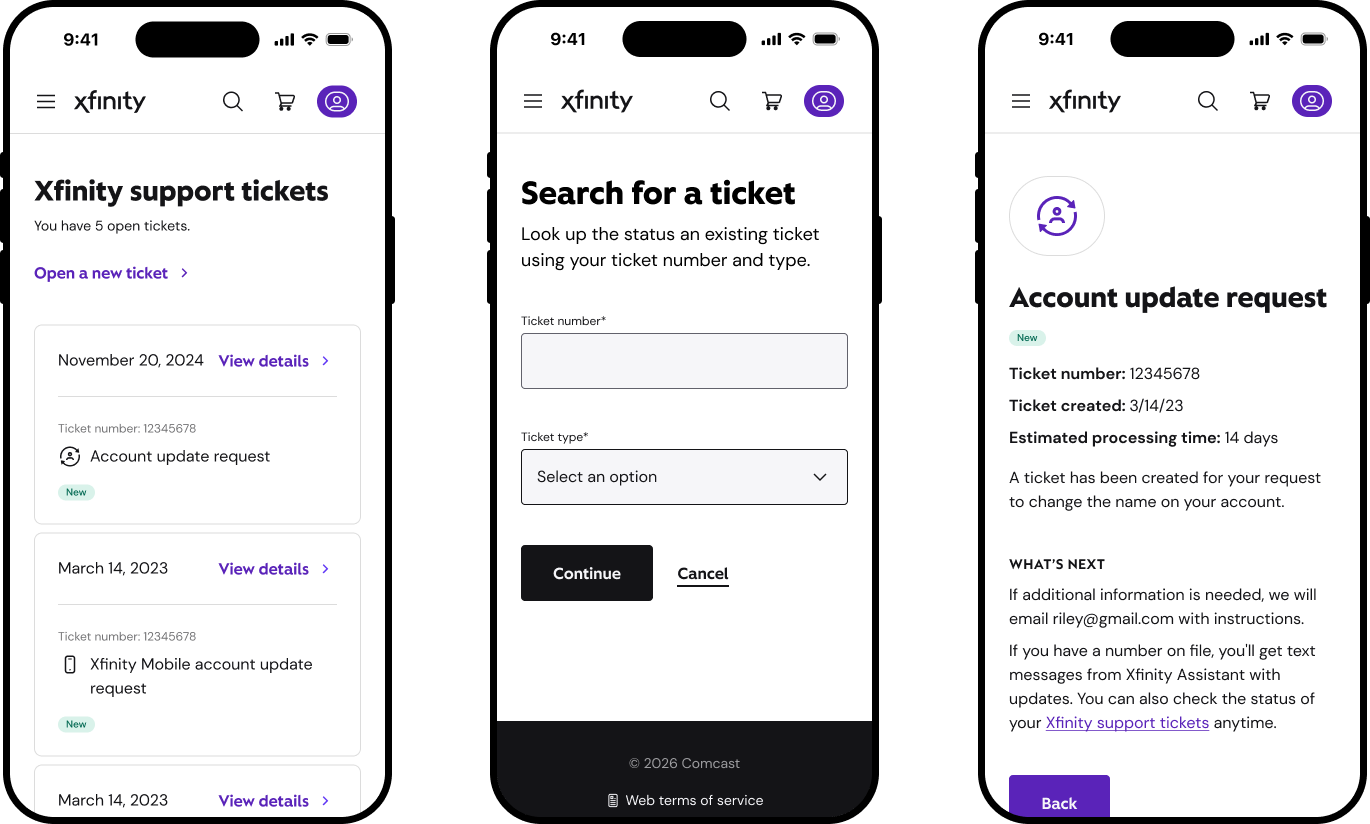
🎫 Track request progress through the broader ticketing ecosystem.
The solution also created a scalable framework for future support workflows, enabling additional ticket-based experiences to build from the same foundation.
Impact
The account change workflow transformed a previously manual support process into a guided digital self-service experience, successfully launching in pilot on October 7, 2026.
By reducing reliance on agent-assisted workflows and streamlining complex requests, the initiative is projected to generate more than $1M in annual savings, while reducing customer effort, repeat contacts, and support escalations.
Outcomes Included
🧭 Expanded digital self-service capabilities by enabling customers to independently initiate sensitive account changes, reducing reliance on support calls and retail visits.
🧩 Built a scalable framework for future ticket-based workflows using shared intake patterns.
💬 Improved clarity during sensitive customer moments through guided steps and tailored flows.
🔄 Established reusable interaction patterns for dynamic, conditional form experiences.