Service Appointments Without Support Calls
Opportunity
Every service appointment starts with something already going wrong.
A technician visit begins with a service issue customers can’t resolve on their own. Their internet may be unreliable or offline. Their TV service may be interrupted. Work, school, entertainment, and the routines that depend on being connected can suddenly be disrupted.
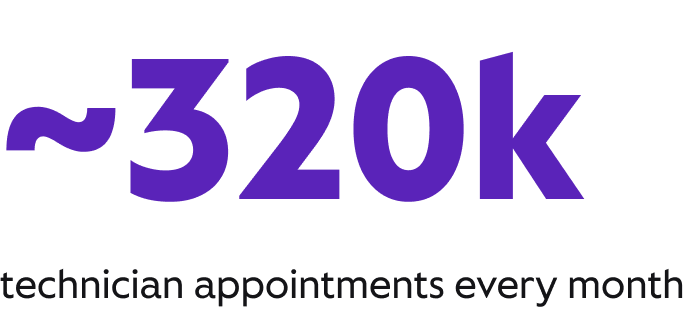
Every month, approximately 320,000 technician appointments are scheduled across the country to help get customers back up and running.
An appointment isn’t a single transaction.
Getting a technician scheduled is only one moment in a much longer experience.
Once customers know they need a technician, they still have to schedule a visit, plan around an arrival window, manage changes, prepare for the appointment, wait for the technician, and ultimately get their service restored.

The experience needed to support the journey — not just the appointment.
But the experience was fragmented across touchpoints.
Customers could schedule a visit and receive basic updates, but there was no connected experience for everything in between.
Scheduling largely happened through support experiences like Xfinity Assistant. Once an appointment was booked, customers received basic SMS communications — but had limited ways to independently view, manage, or understand the status of their visit.
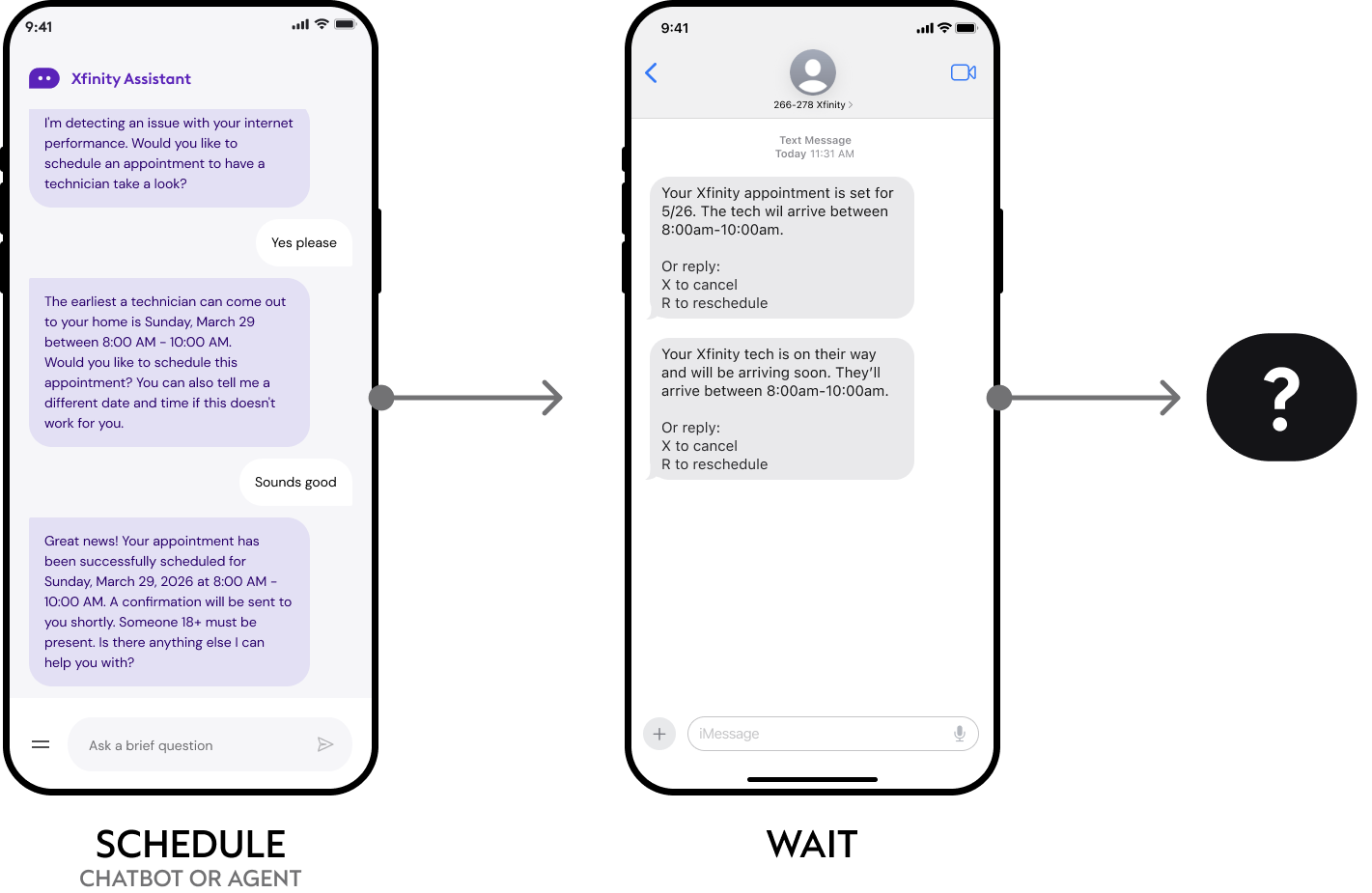
Updates lacked visibility
Customers knew a technician was coming, but not where they were or when they would actually arrive.
Customers had touchpoints.
They didn’t have a journey.
The opportunity was bigger than scheduling.
Give customers more control when their plans change — and more confidence when they’re waiting.
For customers already dealing with a service issue, uncertainty around the appointment created another layer of friction:
Where is my appointment? Can I change it? Who will receive updates? When is my technician actually coming?
For the business, many of those routine needs remained dependent on assisted support instead of giving customers the tools and information to help themselves.
As part of a broader initiative to reduce repeat customer contacts, operational analysis identified approximately 174,000 pre-arrival repeats, 7,000 during the arrival window, and 114,000 after the window. Common drivers included appointment modifications, uncertainty about technician arrival, and missed visits.
These patterns highlighted opportunities to reduce avoidable support interactions by giving customers greater control and visibility throughout the appointment journey.
The opportunity: shift appointment servicing from reactive support to proactive self-service.
Approach
PHASE 1: APPOINTMENT MANAGEMENT
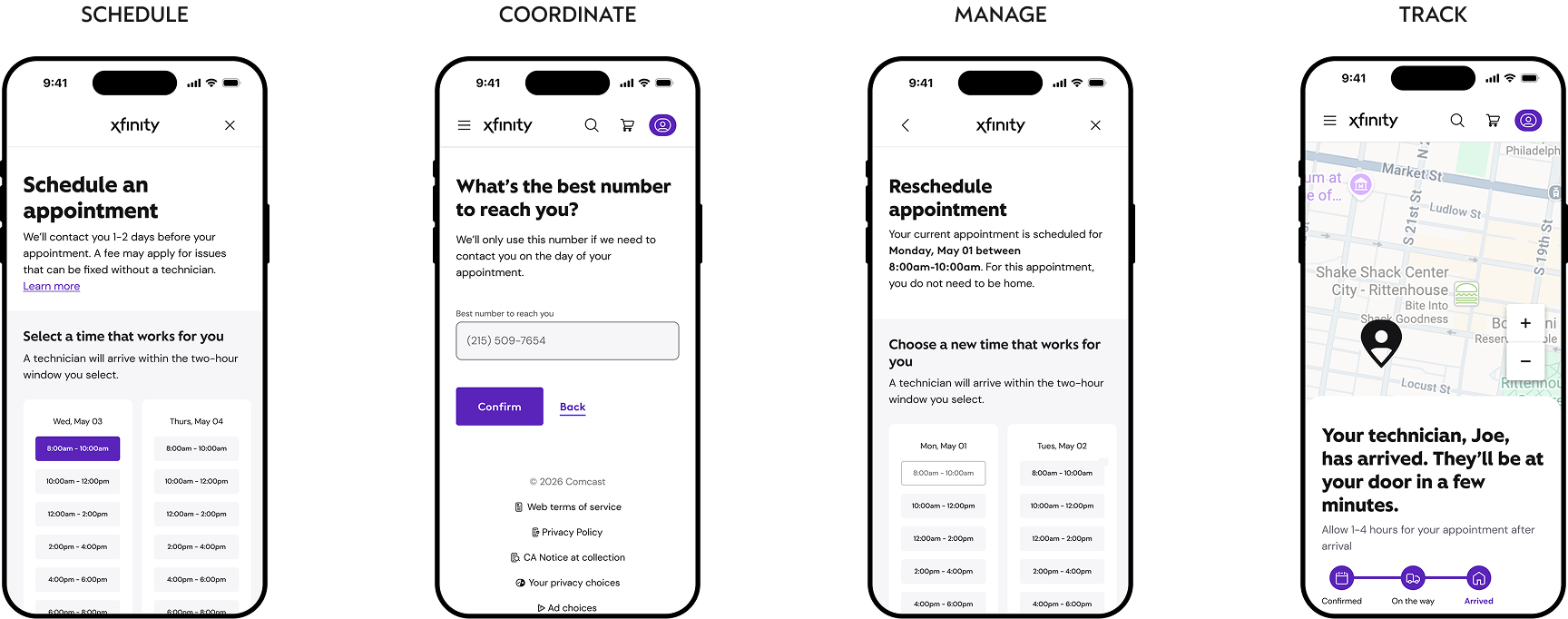
First, give customers control.
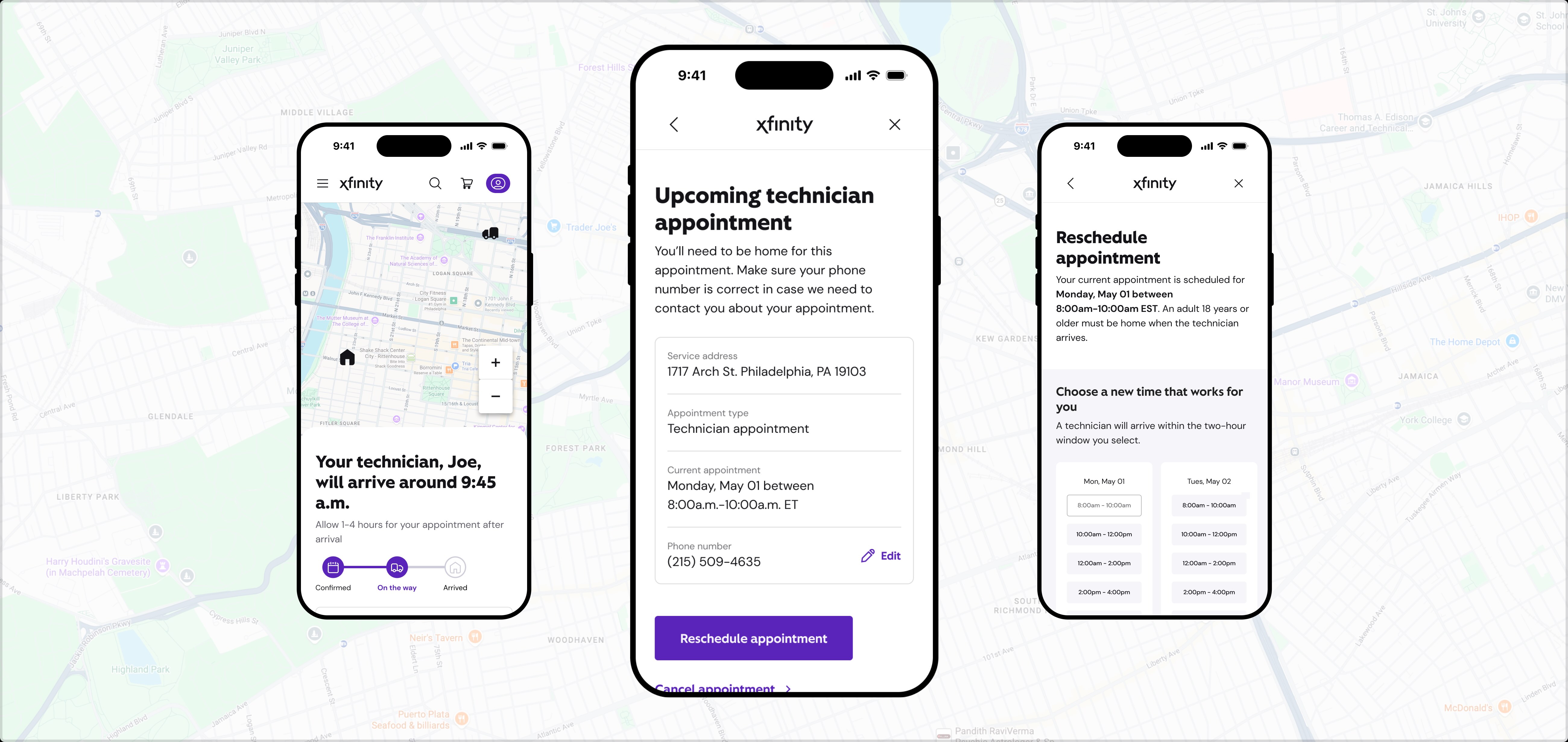
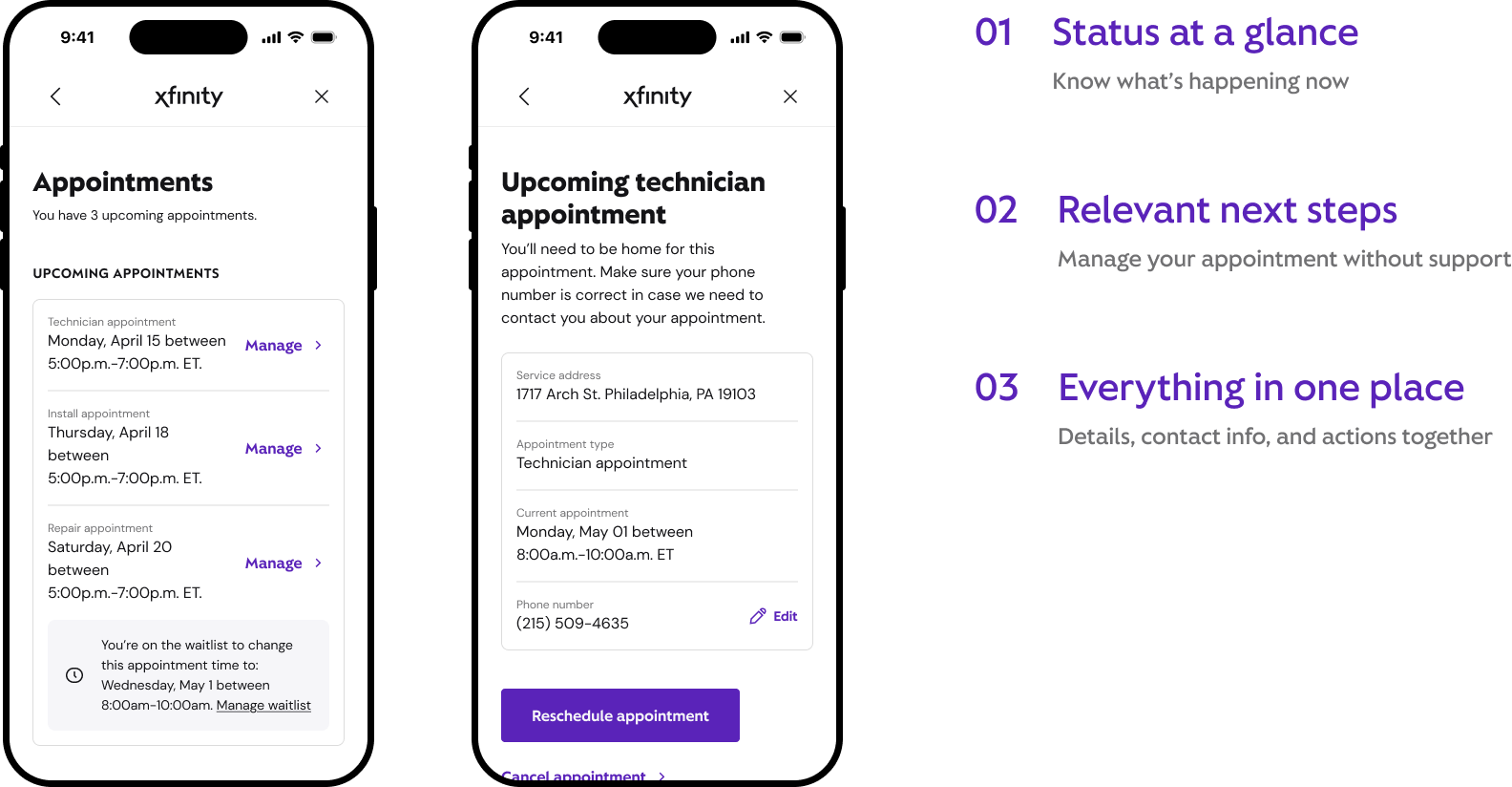
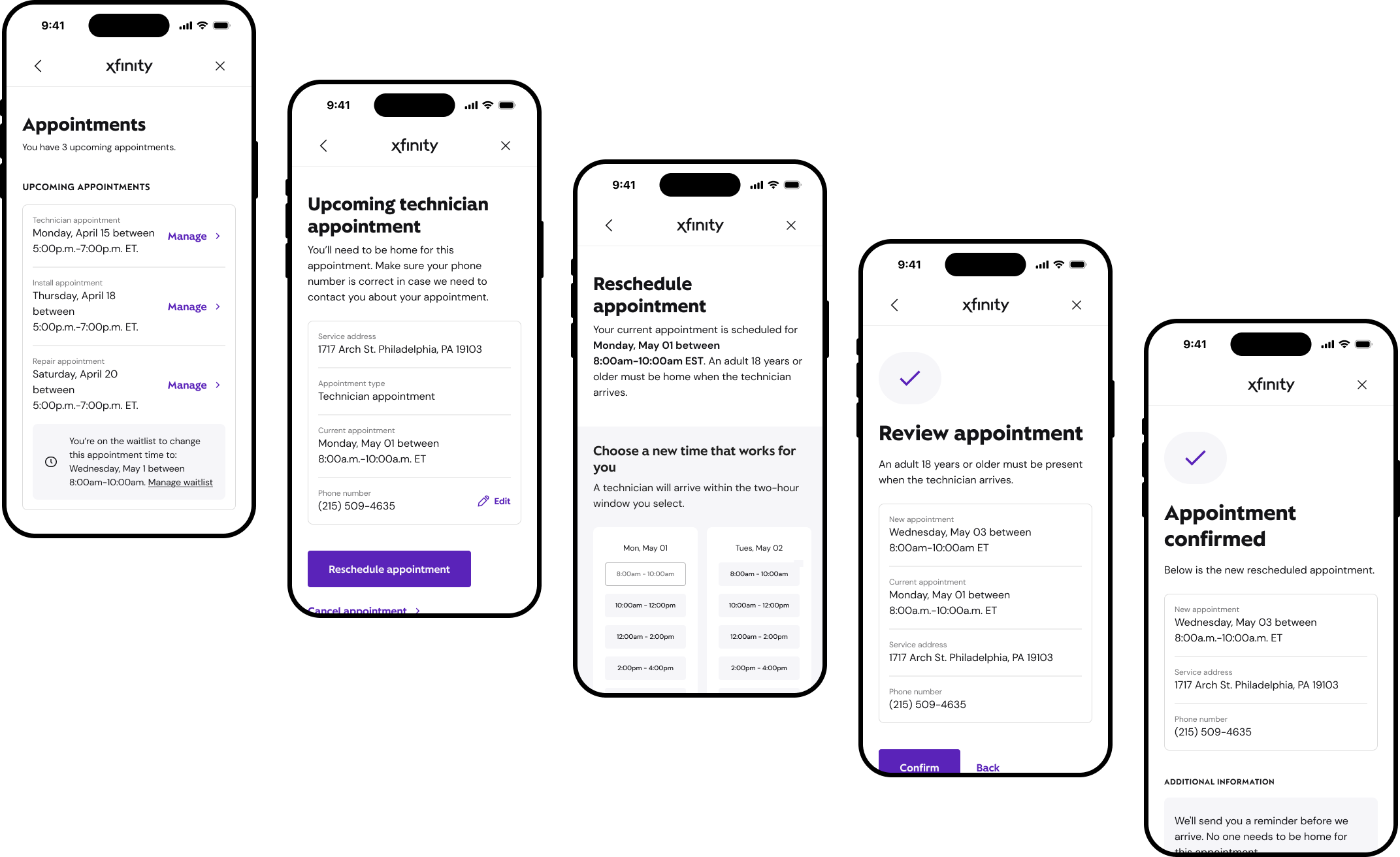
One destination brought appointment status, details, and relevant actions together.
Rather than designing rescheduling, cancellation, and other appointment tasks as isolated support flows, I designed a central destination around the customer’s current appointment state.
Customers could immediately understand what was happening and take the next relevant action without searching for help.
Plans change. The appointment can too.
Shared patterns made common appointment changes feel predictable.
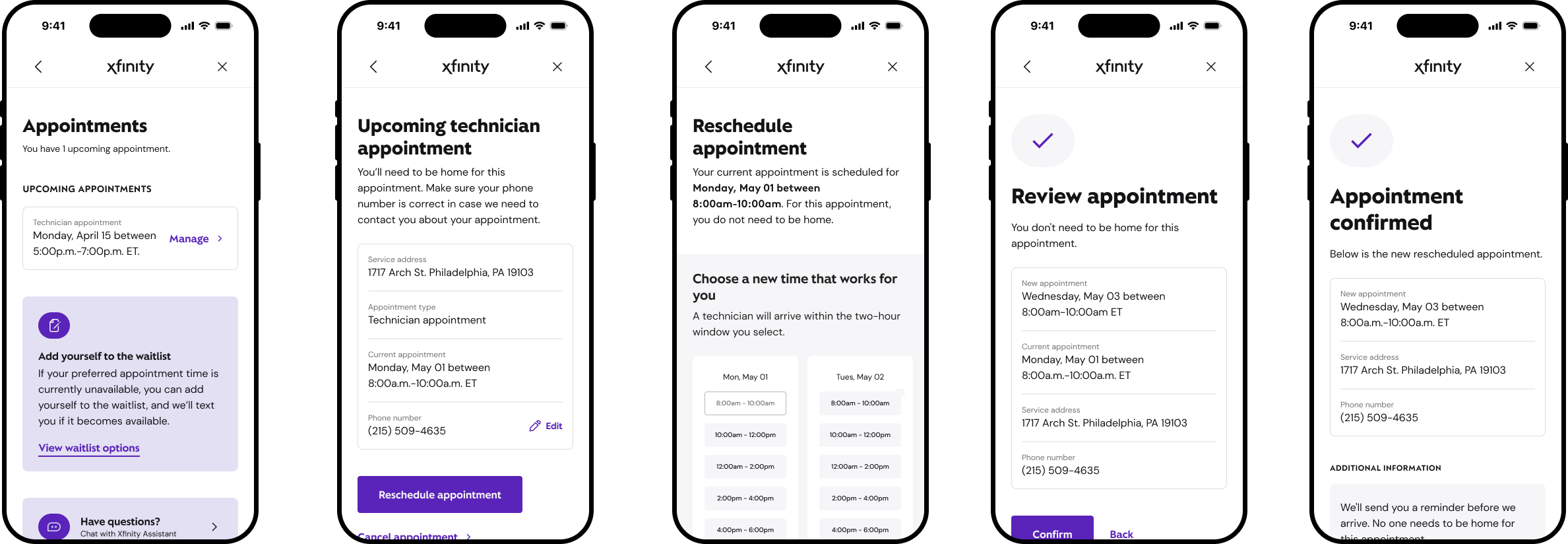
Rescheduling and cancellation happen when a customer's plans have already changed, so both experiences needed to make the outcome clear before asking customers to commit.
For rescheduling, that meant making availability easy to scan and clearly communicating the newly selected window.
For cancellation, it meant preventing accidental action, explaining what would happen next, and providing clear confirmation.
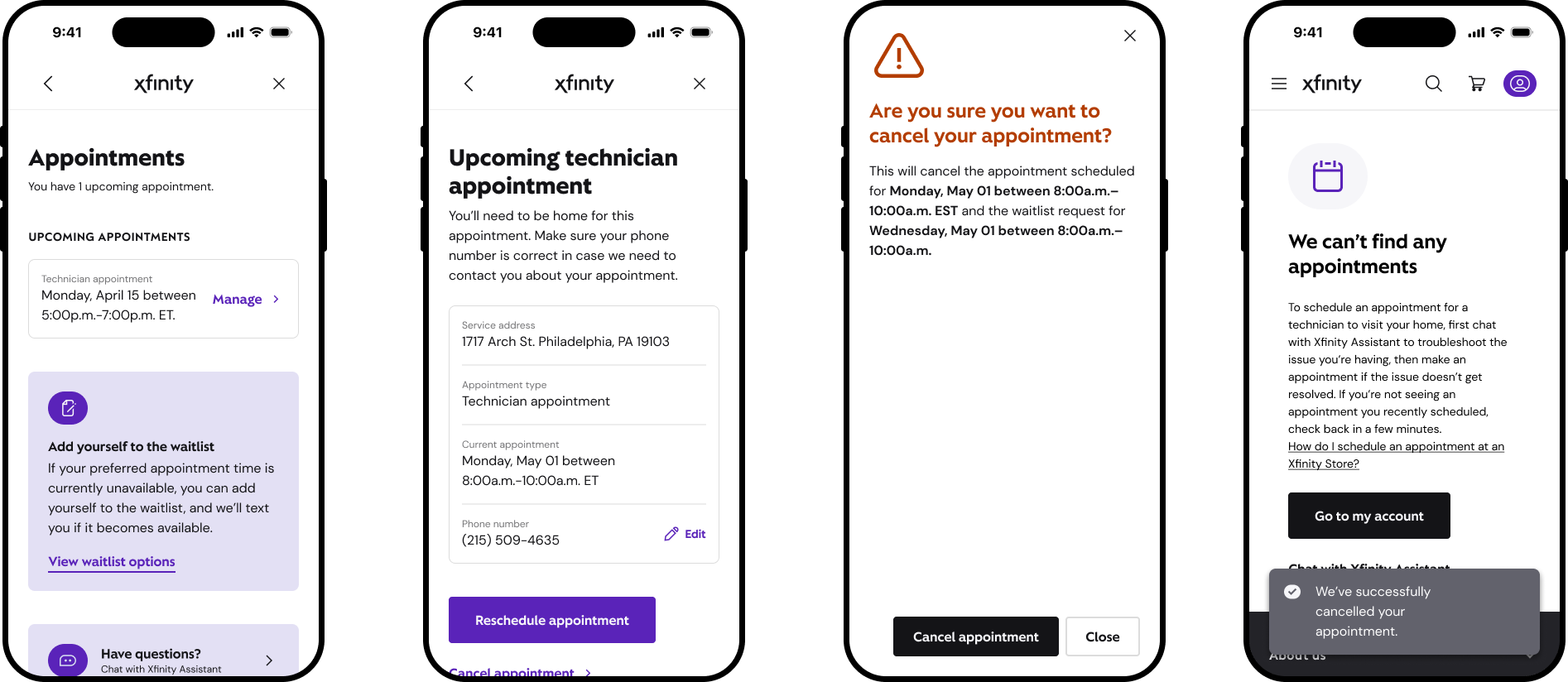
Different decisions. One consistent mental model.
AI-ASSISTED PROTOTYPE · REPLIT
The account holder isn’t always the person waiting at home.
Appointment communication needed to reflect who was actually coordinating the visit.
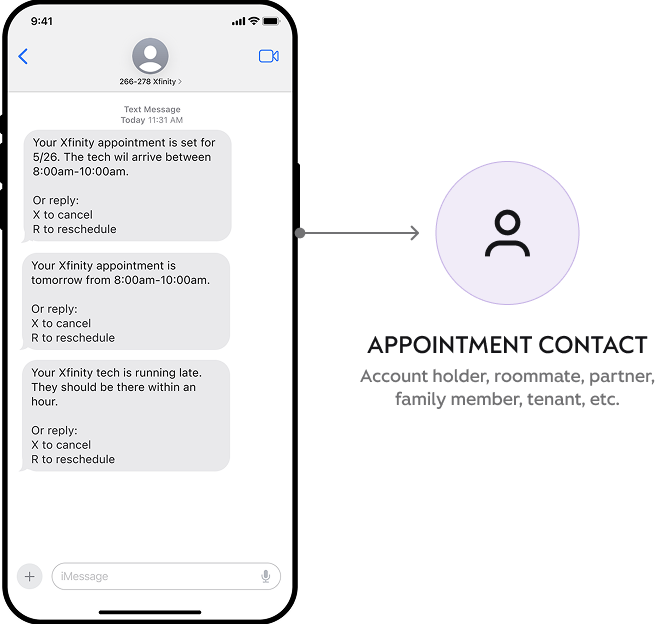
A spouse, roommate, family member, tenant, or someone else may be home for the technician even when they aren't the account holder.
That exposed an important gap: account-level contact information wasn't necessarily the right contact information for an individual appointment.
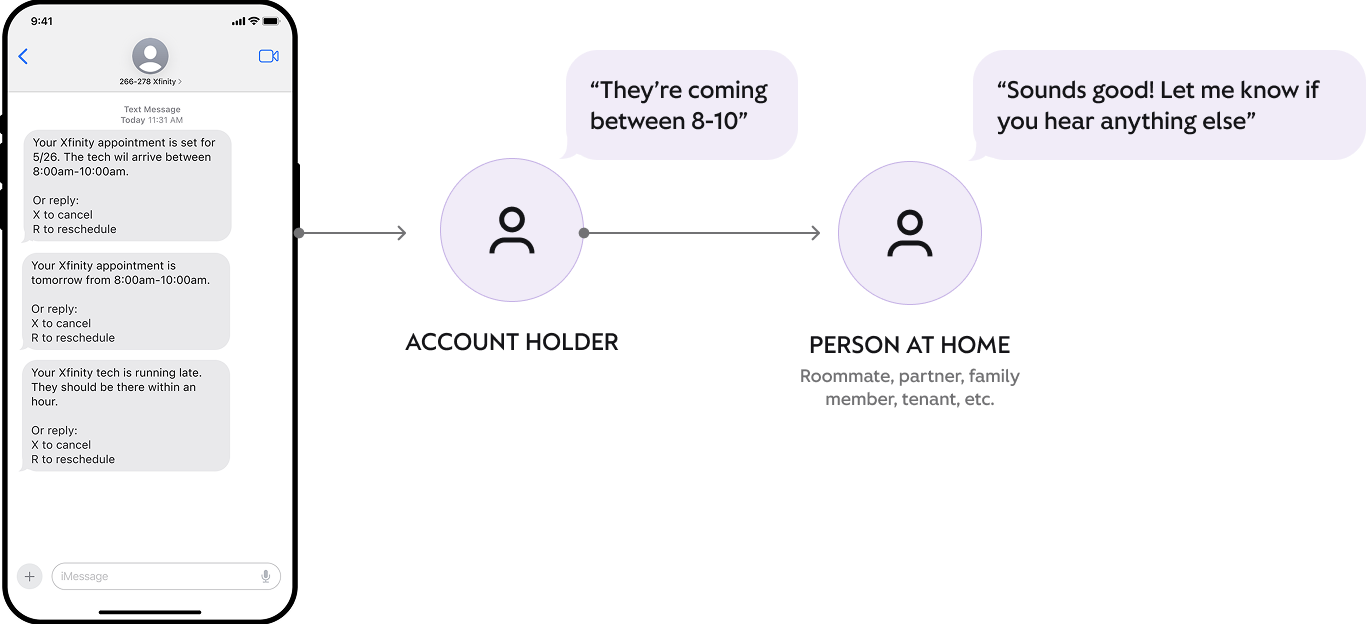
Rather than changing the customer’s account information, we made the contact number appointment-specific — allowing updates to reach the person who actually needed them, without changing the official phone number on the account.
Updating the appointment contact phone number:
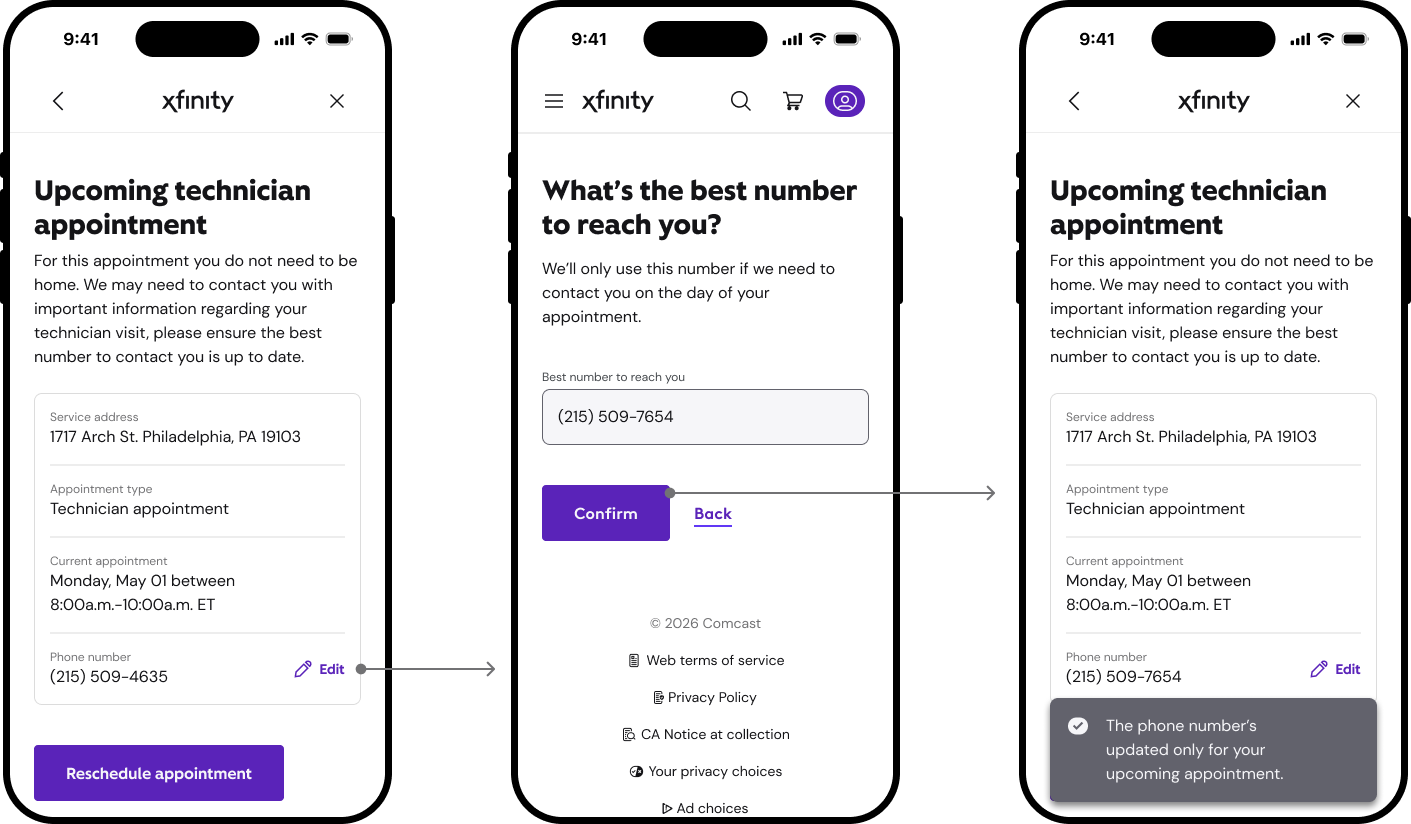
Right updates → right person → fewer communication gaps
PHASE 2: TECHNICIAN TRACKING
Customers could now manage their appointment.
But they still had to wait for it.
Self-service solved the need for control. It didn’t solve the uncertainty surrounding technician arrival.

This became the pivot into the next phase of the work.
Research showed where frustration spiked.
Repeat-contact analysis revealed distinct sources of friction throughout the appointment journey, from rescheduling before a visit to uncertainty during the arrival window and missed appointments afterward.
During the arrival window, 75% of repeats involved customers checking whether their technician was still coming.
Customers could generally select an appointment window and plan around it, but frustration increased when technicians were delayed, appointments were missed, or customers simply didn't know what was happening.
The highest-friction moments weren't necessarily scheduling or preparation. They were the moments when expectations broke.
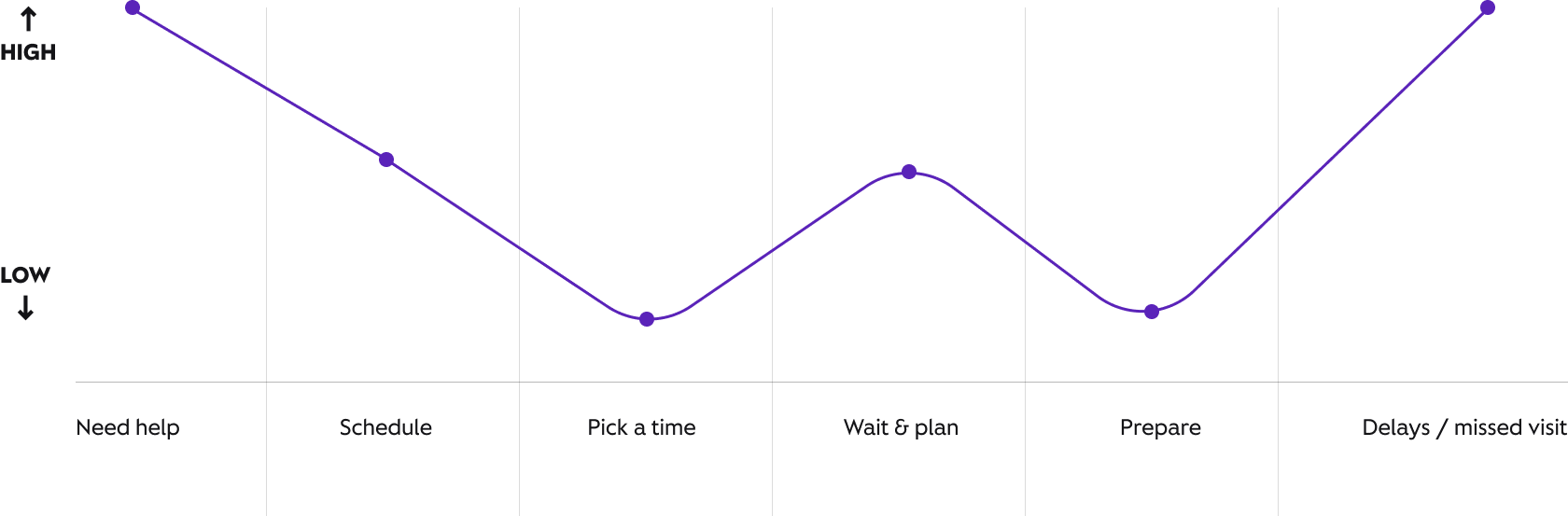
Friction wasn’t concentrated in scheduling. It spiked when expectations broke.
That reframed the problem from managing an appointment to understanding what was happening in real time.
A time window isn’t visibility.
“9:00–11:00 AM” tells customers when to be available. It doesn’t tell them when the technician is actually coming.
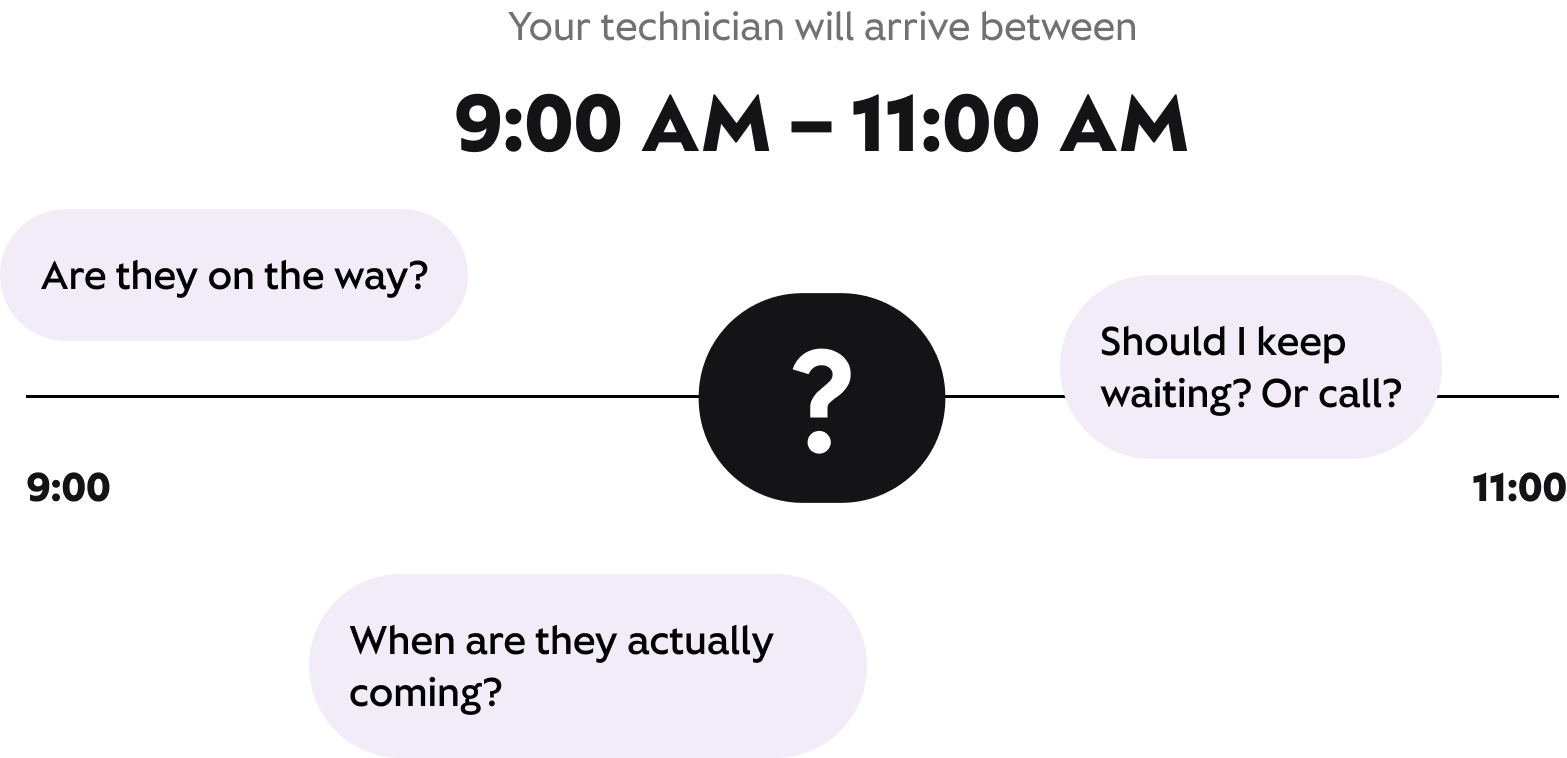
A scheduled appointment gave customers a time window — not visibility.
Technician Tracking was designed to close that gap.
Technician Tracking extends the ecosystem.
Instead of creating another isolated destination, real-time tracking connected back to the appointment management foundation.
Appointment Management already provided the tools customers needed to view and change their visit.
Technician Tracking added a new layer of proactive communication and day-of visibility around it.
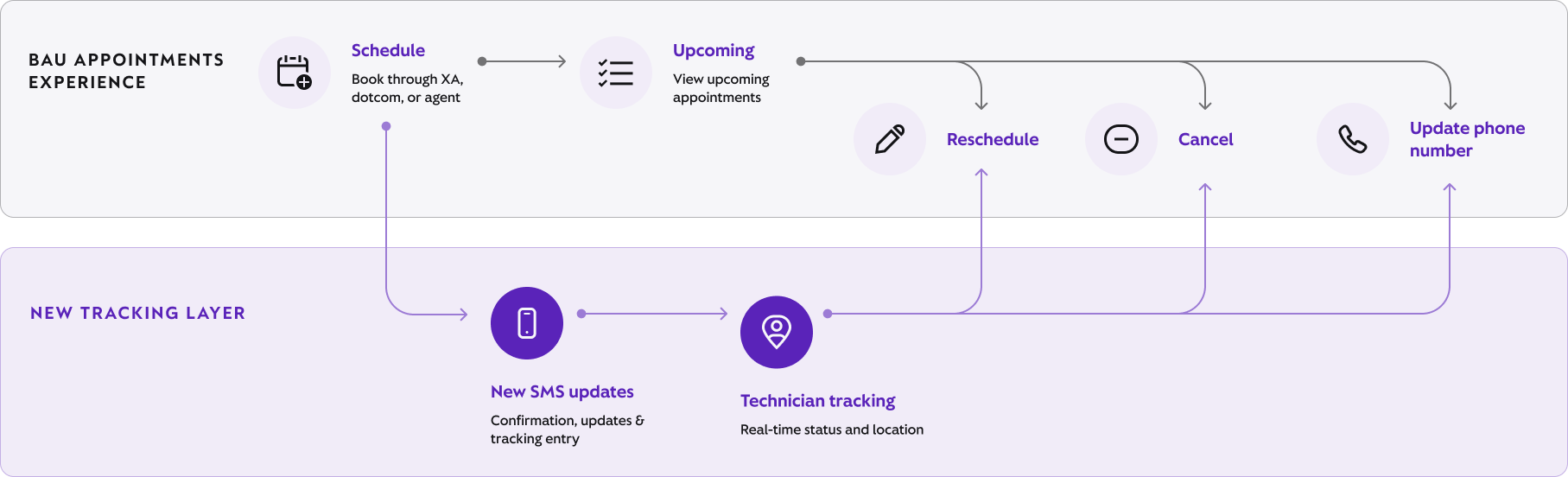
Customers receive proactive SMS updates, move into live tracking when the technician is on the way, and can still access existing management tools when their plans change.
One ecosystem instead of another touchpoint.
As we know more, we tell customers more.
The interface evolves alongside the technician journey.
Rather than showing every possible piece of information at once, the experience becomes progressively more specific as new information becomes available.
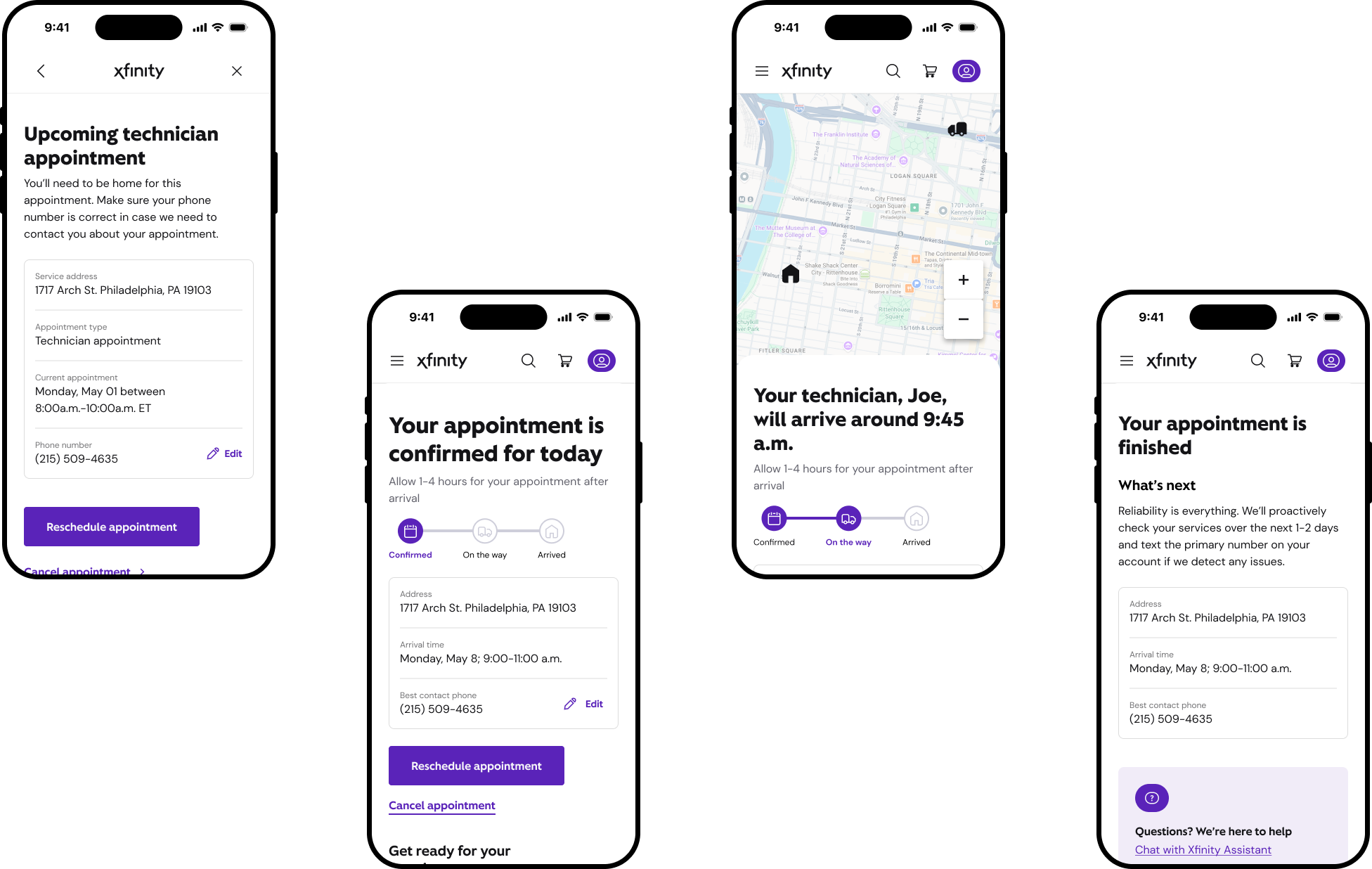
Confirmed → Reminder → On the way → Arrived → Finished
Before the visit, appointment details and management actions remain prominent.
Once the technician is on the way, the experience shifts toward live status, location, and a more precise ETA.
As the technician approaches, arrival information becomes the priority.
Once the appointment is complete, the experience transitions toward resolution and what happens next.
Status, messaging, actions, ETA, and content respond to the appointment state.
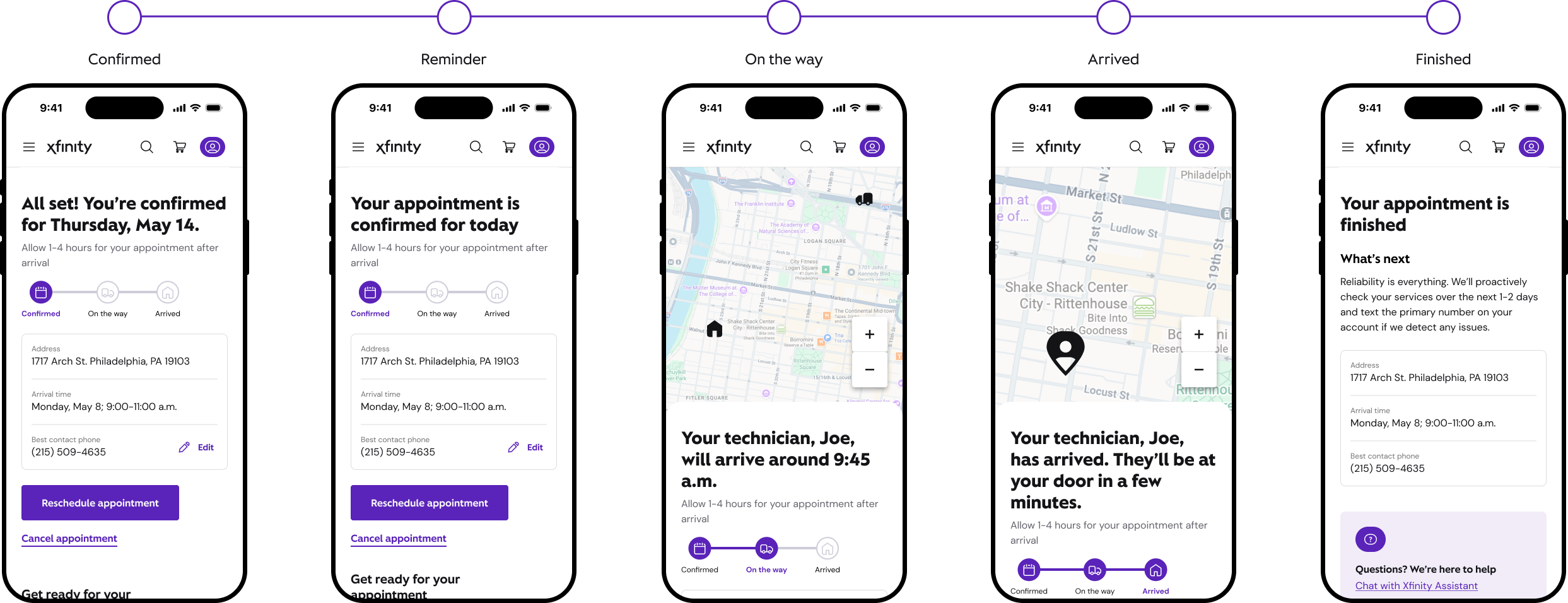
AI-ASSISTED PROTOTYPE · REPLIT
Design for when things don’t go to plan.
Delays and missed visits weren’t edge cases — they were some of the moments where the experience mattered most.
Research showed that frustration was highest when expectations broke, so the system also needed to communicate clearly when reality diverged from the ideal journey.
Delayed states reset expectations rather than leaving customers wondering.
Missed appointments provide a clear path forward.
Resolved states explain what happens next and where customers can go if they still need help.
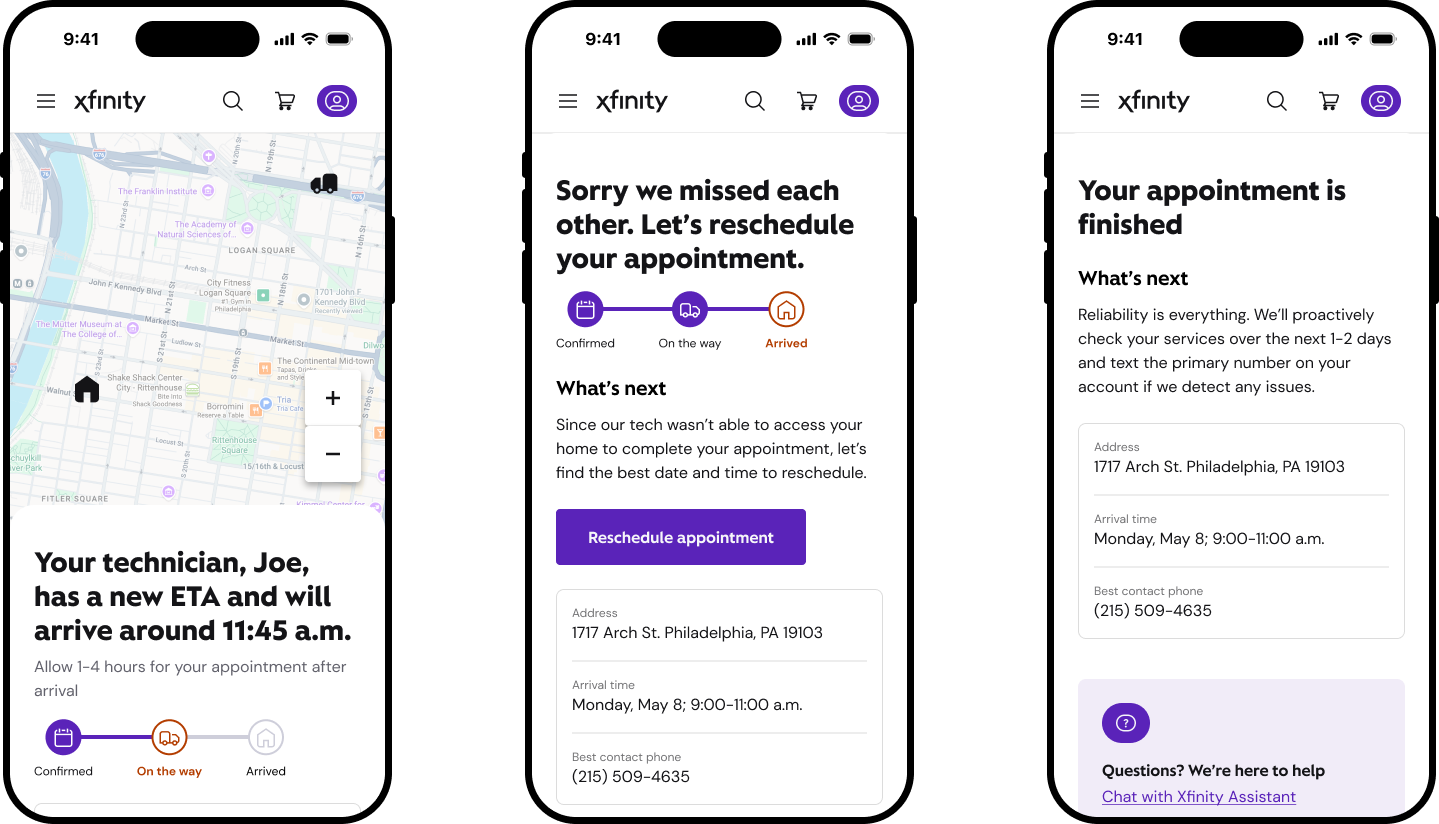
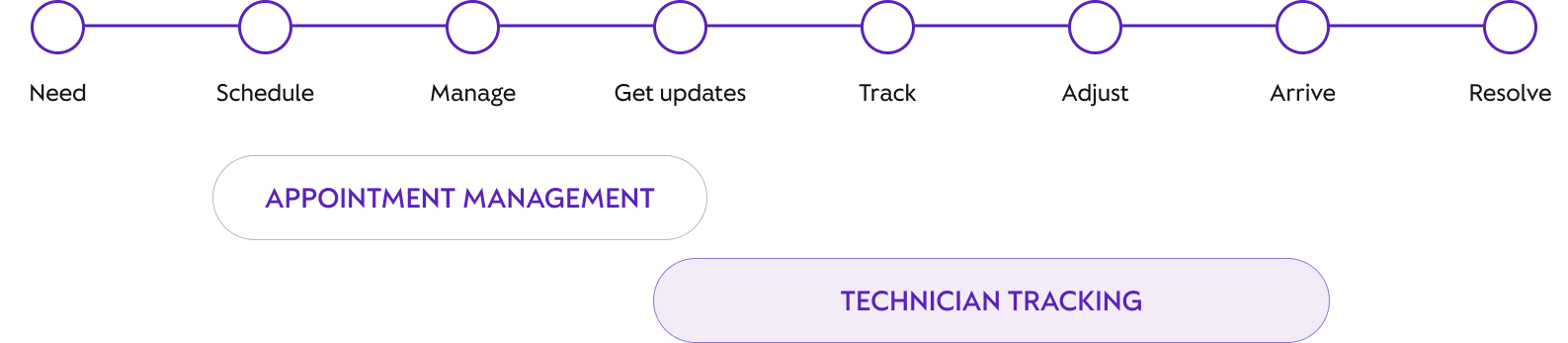
From fragmented touchpoints to a connected journey.
Impact
Two initiatives. One connected appointment experience.
Appointment Management created control. Technician Tracking added visibility. Together, they create confidence throughout the journey.
What began as two phases of work ultimately created a broader appointment ecosystem.
Appointment Management established the self-service foundation: giving customers a place to understand their appointment, change their plans, and manage communication.
Technician Tracking extended that foundation into the day of service: proactively keeping customers informed and replacing a broad arrival window with progressively more useful information.
Together, the two experiences connect the journey from scheduling through technician arrival.
~320K
technician appointments every month
A scalable appointment foundation designed around customer and business needs.
👤 CUSTOMER:
Control
Manage plans independently.
Clarity
Understand what’s happening and what comes next.
Confidence
Spend less of the appointment wondering what to do.
⚙️ BUSINESS:
Self-service
Move routine appointment needs into digital.
Efficiency
Reduce dependency on assisted support.
Coordination
Keep the right people informed throughout the visit.
🧱 PRODUCT:
Foundation
Establish a reusable appointment ecosystem.
Scalability
Support many appointment states through shared patterns.
Extensibility
Create a system that can evolve as new capabilities are added.
The result is more than a set of appointment tools.
It’s a connected experience designed around the way customers actually move through a service visit.
Instead of asking customers to navigate separate support interactions, appointment tools, and communications, the ecosystem connects those moments around a shared understanding of the appointment.
Customers can act when they need control, stay informed when they need visibility, and understand what happens next when circumstances change.
From scheduling an appointment to feeling informed every step of the way.
A connected appointment ecosystem built around control, visibility, and confidence.